Praslin is the second-largest island in Seychelles, and most of what draws visitors there falls into four groups: a palm forest that is a World Heritage Site, beaches on the north and east coasts, two protected islands a short boat ride offshore, and a forest reserve and trail away from the main routes. This guide covers the Vallée de Mai, Fond Ferdinand, Anse Lazio, Curieuse and Cousin, and says who runs each one so that the current opening times and fees can be checked at the source. Those details change, so none are quoted here.
Reaching Praslin and choosing a base
Praslin has its own airport at Grande Anse, also called Iles Des Palmes. The airport authority describes it as a domestic airport that mainly links Praslin with Mahé through flights of about 15 minutes operated by Air Seychelles. The other route is the sea crossing. Cat Cocos, a ferry operator, lists Baie Ste Anne on Praslin as its stop, and gives the Mahé to Praslin crossing as 1 hour 15 minutes. The operator points to its Facebook page for the current schedule, so check it close to the date of travel.
Where the boat or plane lands is not where the sights are. Baie Sainte Anne, the ferry arrival point, has a market that the tourism board lists among the markets for tasting local food, and the Baie Sainte Anne area page in this directory lists what is nearby. The Grand Anse area page covers the airport side of the island. Anse Volbert, also called Côte d'Or, is the beachfront strip where the tourism board places Praslin's family beach, with shallow water, kayaking and glass-bottom boats, and it is also where the boats to Curieuse leave from, according to the park authority. The north-west corner holds Anse Lazio, covered below.
The Vallée de Mai and its coco de mer palms
The Vallée de Mai is the main reason many visitors cross to Praslin. The Seychelles Islands Foundation (SIF), which manages it, calls it a living remnant of the ancient palm forests on Praslin and says it holds the largest intact forest of the endemic coco de mer palm in Seychelles. At 19.5 hectares it is one of the world's smallest natural World Heritage Sites. It was declared a Nature Reserve by the government in 1966, inscribed by UNESCO in 1983, and SIF took over its stewardship in 1989.
The coco de mer is known for its large double nut, which holds the largest seed in the plant kingdom. SIF adds that the forest also holds five other endemic palm species, and that the Vallée de Mai is the only area in Seychelles where all six grow together. Among the wildlife, SIF lists the Seychelles black parrot, which it describes as restricted to Praslin and dependent on the Vallée de Mai and the surrounding palm forest.
Planning a Vallée de Mai visit
SIF publishes the opening times and the entrance fee on its Vallée de Mai page. Two points from that page are worth knowing before the day: there is a last-entry time set ahead of closing, and the site is closed on 25 December and 1 January. Tickets are sold at the visitor centre. SIF says the fee covers the facilities and services at the Vallée de Mai and also supports the other World Heritage Site it manages, Aldabra Atoll.
SIF lists several ways to arrive: a public bus with a stop outside the visitor centre, a taxi, a hire car for the day, walking if the hotel is close, or an organised tour from Mahé, La Digue or Praslin. On site there are a cafeteria, lockers, a souvenir shop, an information centre, toilets and a parking area. Every visitor receives a free leaflet with a map of the paths and a checklist of common species, and independent guides also offer tours.
SIF says there are several walking routes, from about 1.5 km to about 4 km, so the visit can be short or long. It also says the palm forest shelters visitors if it rains. For the black parrot, the tourism board advises early morning or late afternoon, when the birds are most active, and gives their breeding season as November to April. It names April to May and October to November as the best months for the Vallée de Mai, when the weather is typically pleasant.
Fond Ferdinand and the Glacis Noire trail
Two other protected areas on Praslin are worth knowing about. Fond Ferdinand Nature Reserve is managed by SIF, the same body that runs the Vallée de Mai. A 2023 SIF notice about a fee revision said the revenue would help develop Fond Ferdinand's tourism capacity by making self-guided visits possible and expanding its facilities. The notice shows the fee table as an image and the current hours were not confirmed, so contact SIF before planning a morning around it.
The Glacis Noire trail is inside Praslin National Park, at Fond B'offay. SPGA describes it as the park's one official trail, with a maximum walking time of one hour from the main road to the fire tower. It says the trail is not frequented by many visitors and so looks more natural, and that the view at the end reaches La Digue, Ile Ronde, Félicité, Marianne and, further away, Denis, Mahé and Frégate. SPGA publishes the opening hours and the entry fee for non-residents on the same page.
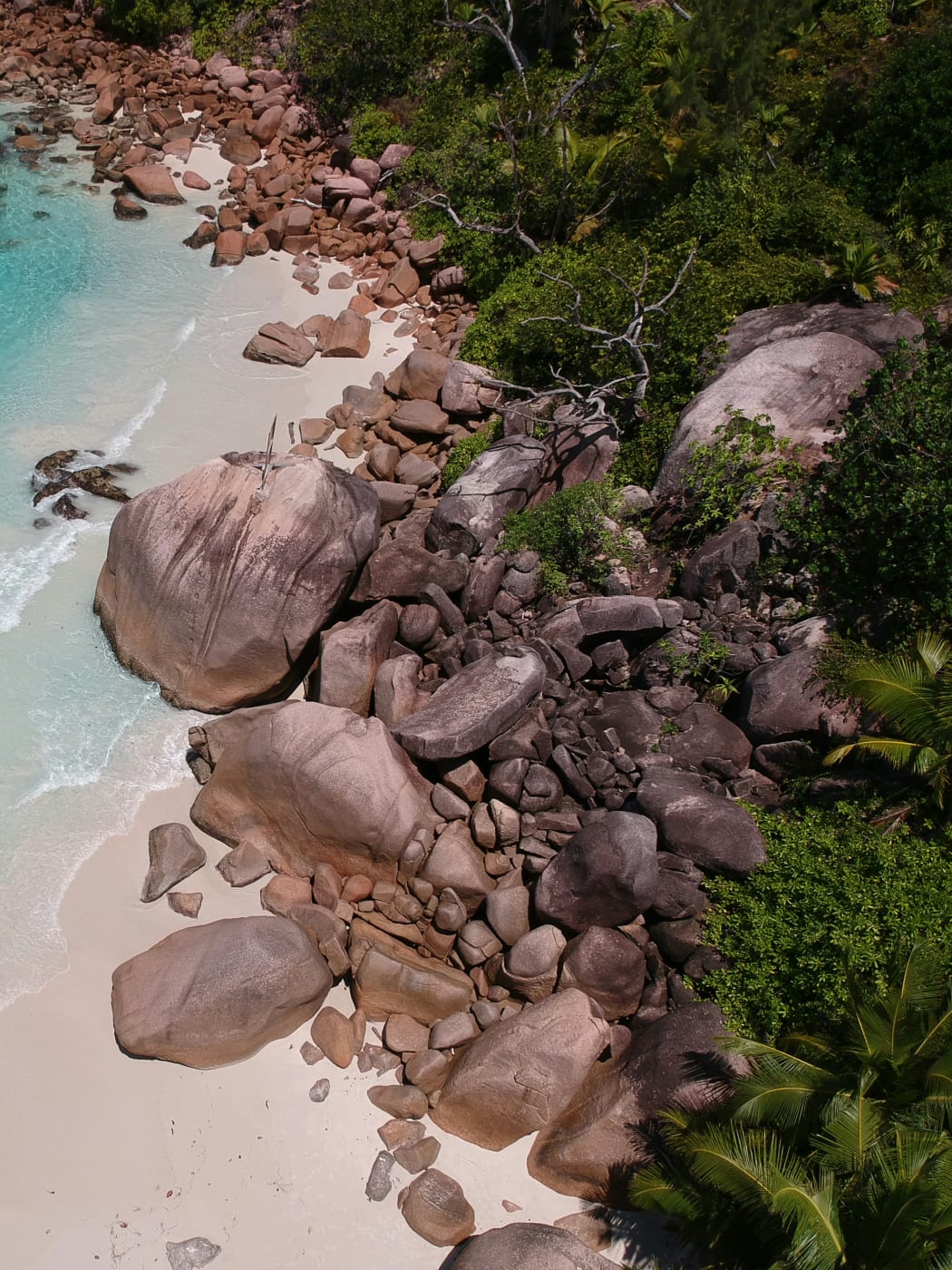
Anse Lazio, the beach in the north-west
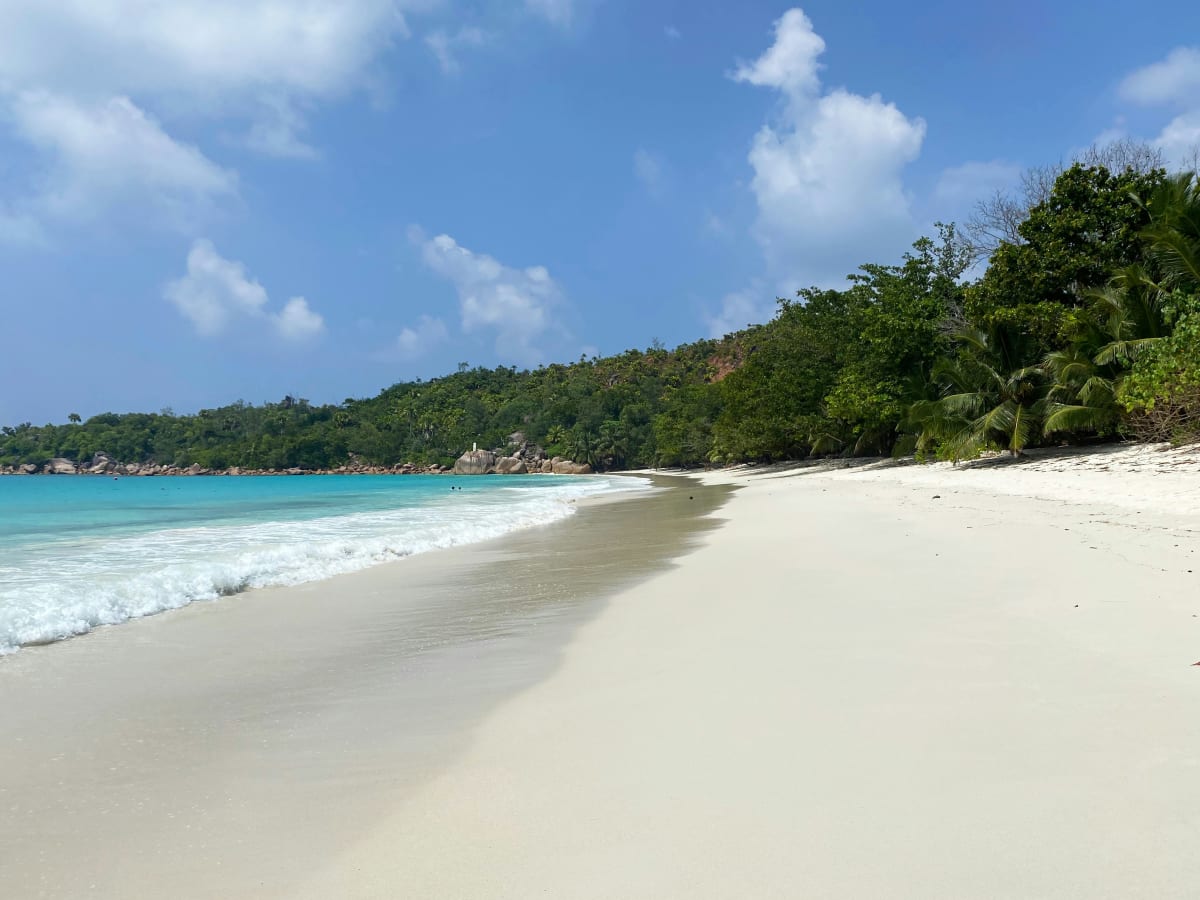
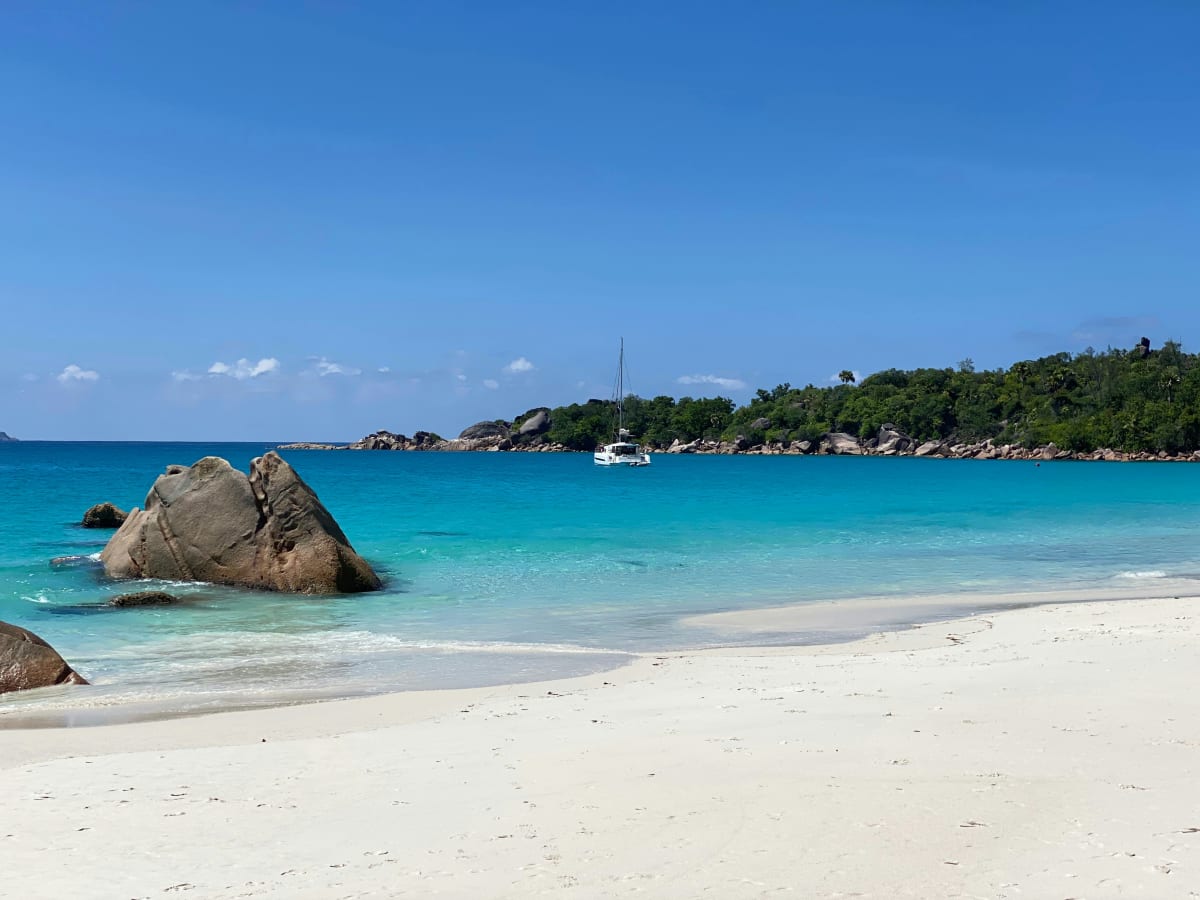
The tourism board describes Anse Lazio as a beach often considered one of the world's most beautiful, with white sand, clear water and granite boulders. It is in the north-west of the island, and the Anse Lazio area page collects the listings around it. One of them is Lazio Beach Residence, an apartment stay at the beach itself.
On safety, two tourism board articles agree. One lists Anse Lazio among the popular beaches that are patrolled and considered safe, and tells swimmers to look for posted signs or local advice. The other describes calm water in the calm seasons, netted swim zones and occasional lifeguards, and gives a tip: arrive early for shade and serenity. The word "occasional" matters. Lifeguards are not promised for every hour, so stay inside the netted zones and follow the signs on the day.
The sea state changes with the season. The tourism board gives the northwest trade winds as running from December to March and the southeast trades from May to September, and names March, April, May, October and November as the calmer months. A visit in one of those months gives the best chance of the calm water the board describes.
The same tourism board article covers Anse Georgette, which it describes as secluded, with no on-site facilities, and says entry must be arranged with the nearby Constance Lemuria resort. Treat it as a separate arrangement that needs advance contact, not as a beach to walk onto.
Curieuse Marine National Park
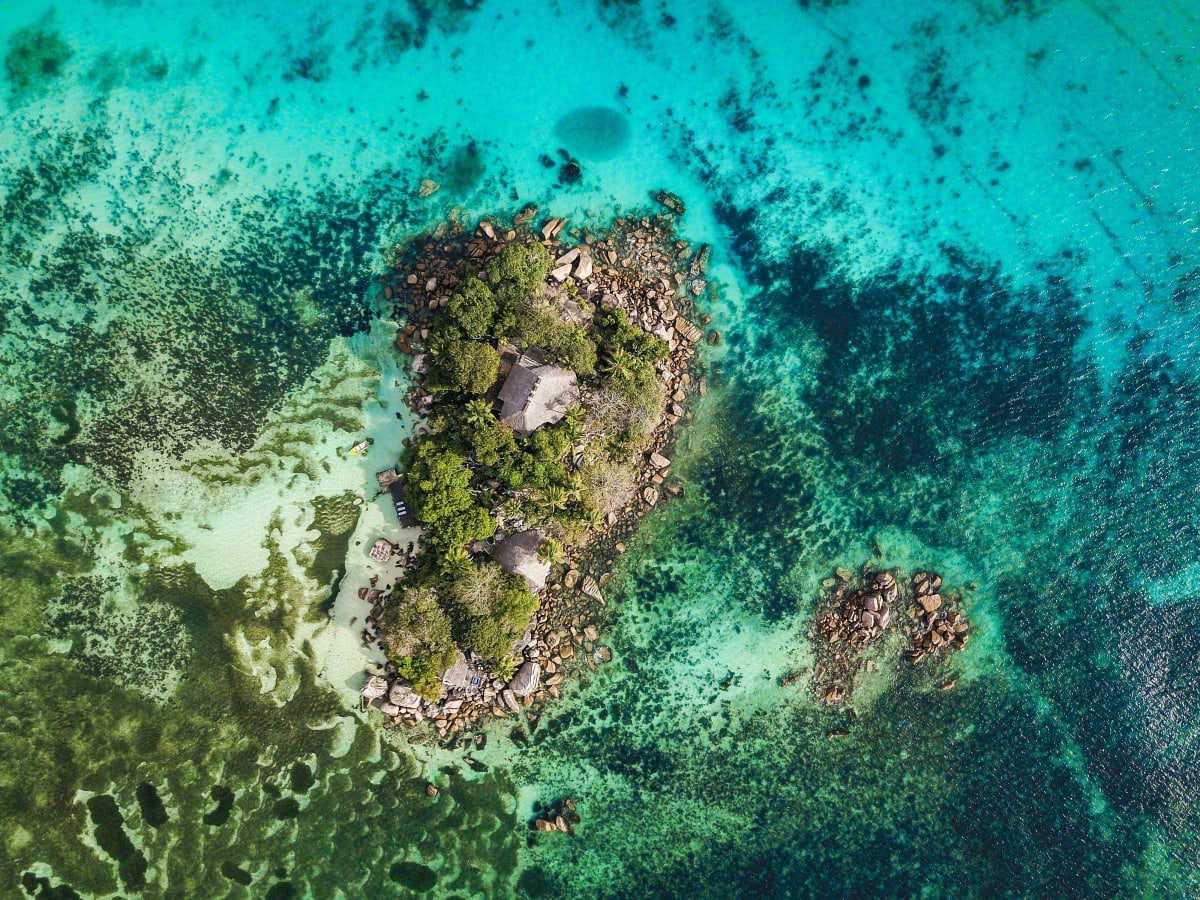
Curieuse lies about 2 km off the north-east coast of Praslin. SPGA, which runs the park, says a boat ride of about 20 minutes from Côte d'Or can be arranged through local tour operators or boat charters, and that the park is open seven days a week. The park boundary takes in the whole island and the channel between Curieuse and Praslin, including St Pierre and Chauve Souris.
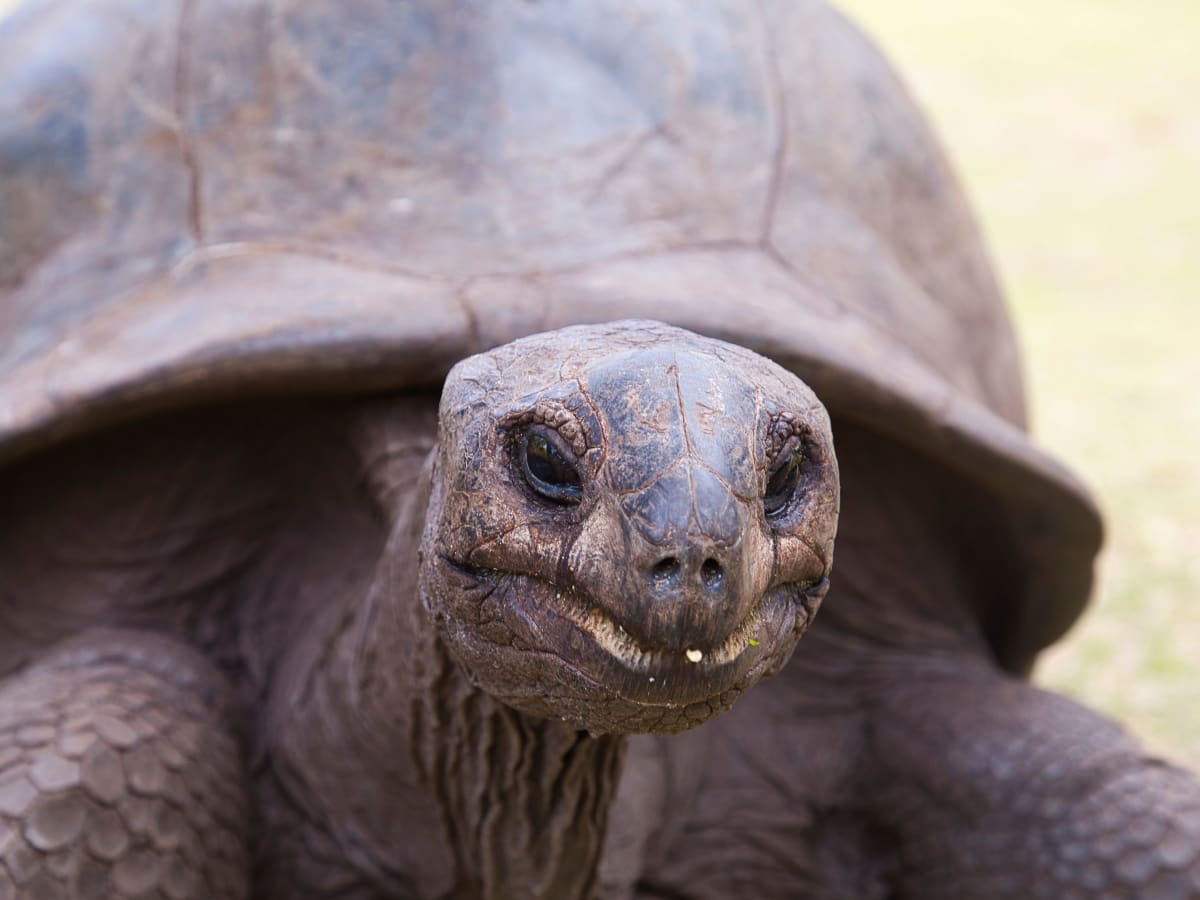
The island's main draws are its tortoises and its mangroves. SPGA says Curieuse is home to hundreds of giant tortoises introduced between 1978 and 1982, with a nursery where young tortoises are kept until they are five years old. A boardwalk crosses the mangrove swamp bordering Baie Laraie, where six of the seven mangrove species known to Seychelles grow, and it lets visitors reach the habitat even at high tide. The coco de mer grows naturally here as well, and SPGA calls Curieuse the only place other than Praslin where it does.
There are marked nature trails, including Baie Laraie to Anse Jose and the Anse Badamier trail. A separate, seasonal and controlled Nesting Sea Turtle Trail runs from October to early March, with its own trail fee. SPGA also notes the ruins of a leprosarium at Anse Jose and says that St Pierre Islet, a 5-minute boat ride from Curieuse, is used for snorkelling and diving. The directory lists Curieuse Island Excursions, based at Anse Volbert, whose listing describes a small-group day trip with hotel pick-up on Praslin.
Cousin Island Special Reserve
Cousin is a different kind of trip: a strict nature reserve, not a place to spend a beach day. Nature Seychelles, the national non-profit that has managed it since 1998, says the island is 29 hectares and was bought in 1968 by the International Council for Bird Preservation to protect the last tiny population of the Seychelles warbler. It is open to visitors on weekdays only and is closed on weekends and public holidays. Its home page gives the hours.
Visits are run by local tour operators; the reserve does not organise trips itself. For a stay on Praslin, the reserve says a hotel or guesthouse can help find an operator. About 200 metres before the island, visitors transfer to one of the reserve's warden boats, which drive onto the beach. The reserve says this strict transfer prevents pests from being brought in by accident. A warden then leads a guided tour that lasts approximately 75 minutes, in English and in French.
The island has no overnight accommodation, no barbecue facilities, no stores and no amenities. The reserve recommends bringing water, mosquito repellent and high-factor sunblock. Ticket prices are on the reserve's visit page, and children under 12 go free.
Putting a Praslin trip together
Day trips from Mahé, La Digue and Praslin are among the ways SIF lists for reaching the Vallée de Mai. Taken together, the sights above suggest a rough order: the Vallée de Mai at the start of the day, when the black parrot is more active, a beach later, and the boat trips on days when the sea is calm. Cousin runs weekdays only, so fix that day first and arrange the rest around it.
For anyone driving, Seychelles keeps to the left, and the tourism board describes the roads as narrow, steep and winding, with 40 km/h as the limit in towns and 65 km/h elsewhere. Hire cars stay on the island where they are collected, so a car from Mahé does not cross by ferry; the booking page lists the pick-up places. Seychelles Airport Car Hire is the place to check availability. Buses are another option: the national operator, SPTC, runs services across Mahé and Praslin and has a bus depot on Praslin.
Carry cash in Seychelles rupees for small purchases, because the tourism board says cash is essential for markets, local shops, taxis and small vendors. Check the operator of each site before leaving, because every hour and fee mentioned here belongs to them, not to this page.


